A tummy tuck in Turkey typically costs $2,500 to $8,000: about $2,500 to $3,500 for a mini tummy tuck and $4,000 to $7,000 for a full tummy tuck, compared with an average surgeon’s fee of $8,174 in the United States before anaesthesia and hospital costs. A tummy tuck (abdominoplasty) removes loose skin and fat from the lower belly and usually tightens separated stomach muscles. It is done under general anaesthesia, takes 1 to 5 hours, and most people need at least a week off work and 4 to 6 weeks before hard exercise. It is not a weight-loss operation, it leaves a permanent low scar, and the most common complication is a fluid collection called a seroma.
Tummy tuck surgery in Turkey draws patients from the UK, Europe and the US who want a flatter, firmer stomach after pregnancy or major weight loss, at a lower cost than at home. This guide explains what a tummy tuck is, how much a tummy tuck costs in Turkey and what a quote should include, the types of tummy tuck, who is a good candidate, the procedure step by step, recovery and scars, the risks, and how to plan your trip to Istanbul safely.
What is a tummy tuck (abdominoplasty)?
A tummy tuck, or abdominoplasty, is a cosmetic operation that removes excess skin and fat from the abdomen and tightens the abdominal muscles to give a flatter, smoother stomach.
Diet and exercise can reduce fat, but they cannot remove stretched skin or repair stomach muscles that have separated, a condition called diastasis recti that is common after pregnancy. A tummy tuck treats both. The surgeon removes the loose lower skin, stitches the separated muscles back together, and repositions the belly button so it sits naturally on the tightened skin. Stomach liposuction is often added to refine the waist and flanks.
Tummy tuck vs liposuction: which one do you need?
| Tummy tuck | Liposuction | |
|---|---|---|
| Removes loose skin | Yes | No |
| Repairs separated muscles | Yes (full tummy tuck) | No |
| Removes fat | Yes, from the lower belly | Yes, from one or more areas |
| Scar | Long, low scar hidden by underwear | A few tiny scars |
| Recovery | At least 1 week off work; 4–6 weeks before hard exercise | Usually shorter |
| Best for | Loose skin and a weak belly wall after pregnancy or weight loss | Good skin tone with stubborn fat |
If your skin is firm and your concern is only fat, read our guide to liposuction in Turkey. If your skin hangs or your belly still bulges after pregnancy, a tummy tuck is usually the right operation.
How much does a tummy tuck cost in Turkey?
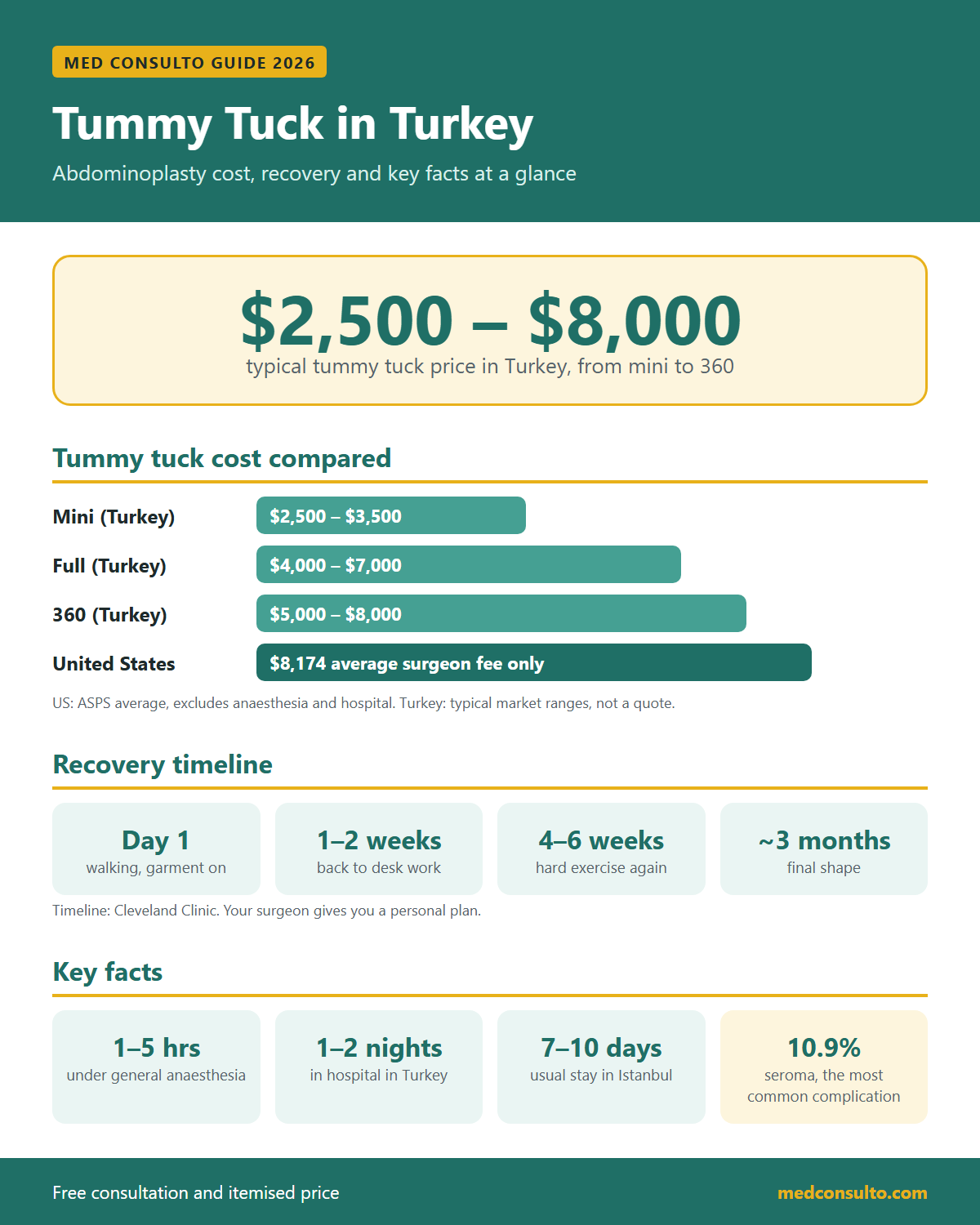
A tummy tuck in Turkey typically costs $2,500 to $8,000: about $2,500 to $3,500 for a mini tummy tuck, $4,000 to $7,000 for a full tummy tuck and $5,000 to $8,000 for an extended or 360 tummy tuck, depending on the surgeon, the hospital and what the package includes.
Tummy tuck cost in Turkey by type
| Type of tummy tuck | Typical cost in Turkey |
|---|---|
| Mini tummy tuck | $2,500–$3,500 |
| Full tummy tuck (with muscle repair) | $4,000–$7,000 |
| Extended or 360 tummy tuck | $5,000–$8,000 |
Typical market ranges, not a quote. Medconsulto gives you an itemised written price after a surgeon reviews your photos and medical history.
Tummy tuck cost: Turkey vs the US and UK
The American Society of Plastic Surgeons reports an average tummy tuck cost of $8,174 in the United States, and notes that this figure does not include anaesthesia, operating room facilities or other related expenses. The full bill at home is therefore much higher than the surgeon’s fee alone. In Turkey, many packages bundle the surgeon, anaesthesia, hospital stay, compression garment and transfers into one price, which is the main reason patients save money.
Tummy tuck package in Turkey: what should the quote include?
- Surgeon’s and anaesthetist’s fees, with the names and qualifications of both.
- Hospital stay: usually 1 to 2 nights in a licensed hospital, not a day clinic.
- Muscle repair: confirm it is included in a full tummy tuck, not charged as an extra.
- Pre-operative tests such as blood tests and an ECG.
- Compression garment, medicines and dressings.
- Hotel nights after discharge, airport and clinic transfers, and an interpreter.
- Follow-up checks before you fly home, and who you contact once you are back.
Tummy tuck Istanbul price: what makes it cost more?
- The type of operation: an extended or 360 tummy tuck takes longer than a mini.
- Added liposuction of the flanks or back, or other procedures in a mommy makeover.
- Your body: more loose skin, a higher BMI or previous abdominal surgery can make surgery longer.
- The surgeon’s experience and the hospital you choose.
- The length of your stay and the level of hotel and aftercare.
Types of tummy tuck
The main types of tummy tuck are the mini (partial) tummy tuck, the full tummy tuck and the extended or circumferential (360) tummy tuck; the right one depends on how much loose skin you have and where it is.
| Type | Incision | Best for |
|---|---|---|
| Mini tummy tuck | Short, low incision; usually no cut around the belly button | A small pouch of loose skin below the belly button |
| Full tummy tuck | Hip-to-hip incision above the pubic area, plus around the belly button | Loose skin above and below the belly button and separated muscles |
| Extended tummy tuck | Longer incision that reaches round the hips | Loose skin on the belly and the sides (love handles) |
| 360 (circumferential) tummy tuck | Incision all the way round the body | Loose skin on the belly, flanks and back, often after major weight loss |
| Fleur-de-lis tummy tuck | Horizontal plus vertical incision | Large amounts of loose skin after losing about 100 lb (45 kg) or more |
For a closer look at each option, including male tummy tucks and muscle repair, read our guide to the types of tummy tucks.
Who is a good candidate for a tummy tuck?
A good candidate for a tummy tuck is a healthy adult at a stable weight who does not smoke, does not plan further pregnancies, and has loose skin or weak stomach muscles that diet and exercise have not fixed.
- You are in good general health.
- Your weight has been stable for several months.
- You do not smoke, or you can stop well before and after surgery.
- You are not planning to become pregnant.
- You have realistic expectations about the result and the scar.
When should you wait?
Cleveland Clinic advises waiting if you are still losing weight or plan to have more children, because a later pregnancy or weight change can stretch the skin and muscles again. Smoking and conditions that affect circulation or healing, such as poorly controlled diabetes, raise the risk of complications and need to be discussed with the surgeon first.
Tummy tuck procedure, step by step
A tummy tuck is done under general anaesthesia and takes 1 to 5 hours: the surgeon makes a low incision, repairs the muscles, removes the loose skin, repositions the belly button and closes the wound.
- Consultation and tests: the surgeon examines your abdomen, reviews your health and medicines, and orders blood tests. You stop smoking and stop aspirin and some supplements about two weeks before surgery.
- Marking: on the day, the surgeon marks the incision lines while you stand.
- Anaesthesia: you are given general anaesthesia, so you sleep through the operation.
- Incision and muscle repair: the surgeon makes a low incision, lifts the skin and stitches separated stomach muscles together.
- Skin removal and belly button: the upper skin is pulled down, the excess is removed, and the belly button is brought out through a new opening.
- Closure: the wound is closed in layers. Small drains may be placed to remove fluid, and a compression garment is fitted.
Cleveland Clinic notes that a tummy tuck is often an outpatient operation in the US. In Turkey, most patients stay 1 to 2 nights in hospital so that pain, drains and early walking can be supervised before they move to their hotel.
Tummy tuck recovery: what to expect
Most people walk the same day or the day after a tummy tuck, return to desk work after 1 to 2 weeks, avoid heavy lifting and hard exercise for 4 to 6 weeks, and see the final result after about 3 months.
| Time after surgery | What to expect |
|---|---|
| Days 1–3 | Pain, tightness and tiredness. You walk slightly bent forward, wear the compression garment and may have drains. |
| Week 1 | Drains are usually removed and you have a check before flying home. |
| Weeks 1–2 | Most people return to desk work after at least one week off. |
| Weeks 4–6 | Gradual return to the gym and lifting once your surgeon agrees. |
| About 3 months | Most swelling has settled and the final shape is visible. |
| Up to 1 year | The scar keeps fading and flattening. |
Timeline based on Cleveland Clinic. Your surgeon will give you a personal plan.
Tips to speed up your tummy tuck recovery
- Walk gently several times a day to protect against blood clots.
- Wear the compression garment for as long as your surgeon advises.
- Do not smoke or vape, as nicotine slows wound healing.
- Eat enough protein and drink plenty of water.
- Take your medicines exactly as prescribed, and avoid lifting anything heavy.
- Report fever, increasing pain, redness, leaking from the wound or calf swelling straight away.
Tummy tuck scars and the belly button
A tummy tuck always leaves a scar. In a full tummy tuck it runs low across the abdomen, usually from hip to hip, so that underwear or a swimsuit can hide it, and there is a small scar around the belly button. A mini tummy tuck leaves a shorter scar. Scars are red at first and fade over 12 months or more, although some stay wide. For more detail on scars, the belly button and the healing process, read tummy tuck recovery: what to expect.
Benefits of a tummy tuck
The main benefits of a tummy tuck are a flatter, firmer stomach, the removal of loose skin that exercise cannot fix, the repair of separated muscles, and a long-lasting result if your weight stays stable.
- Removes loose, overhanging skin after pregnancy or weight loss.
- Repairs diastasis recti and firms the abdominal wall.
- Improves stretch marks on the lower belly, where that skin is removed.
- Clothes fit better and many people feel more confident.
- Lasting result: Cleveland Clinic describes the result as permanent, although later weight gain or pregnancy can change it.
Tummy tuck risks and complications
A tummy tuck is major surgery: its risks include seroma (fluid build-up), bleeding, infection, poor wound healing, blood clots, numbness, uneven healing and a wide or visible scar.
- Seroma: the most common local complication. A 2021 meta-analysis of 143 studies and 27,834 patients found that it happened after about 10.9 percent of abdominoplasties. Small seromas are drained with a needle in the clinic.
- Wound-healing problems, especially at the centre of the scar and in smokers.
- Infection and bleeding.
- Blood clots in the legs or lungs. Early walking, compression and your surgeon’s clot-prevention plan lower the risk, which matters even more before a long flight.
- Numbness of the lower belly skin, which often improves over months.
- Asymmetry, “dog ears” (small bulges at the ends of the scar) or a wide scar that may need a small revision.
The risks are lower when you are a healthy non-smoker at a stable weight, when the operation is done in a fully equipped hospital, and when you stay in Turkey long enough to have your check-ups.
Planning a tummy tuck in Turkey safely
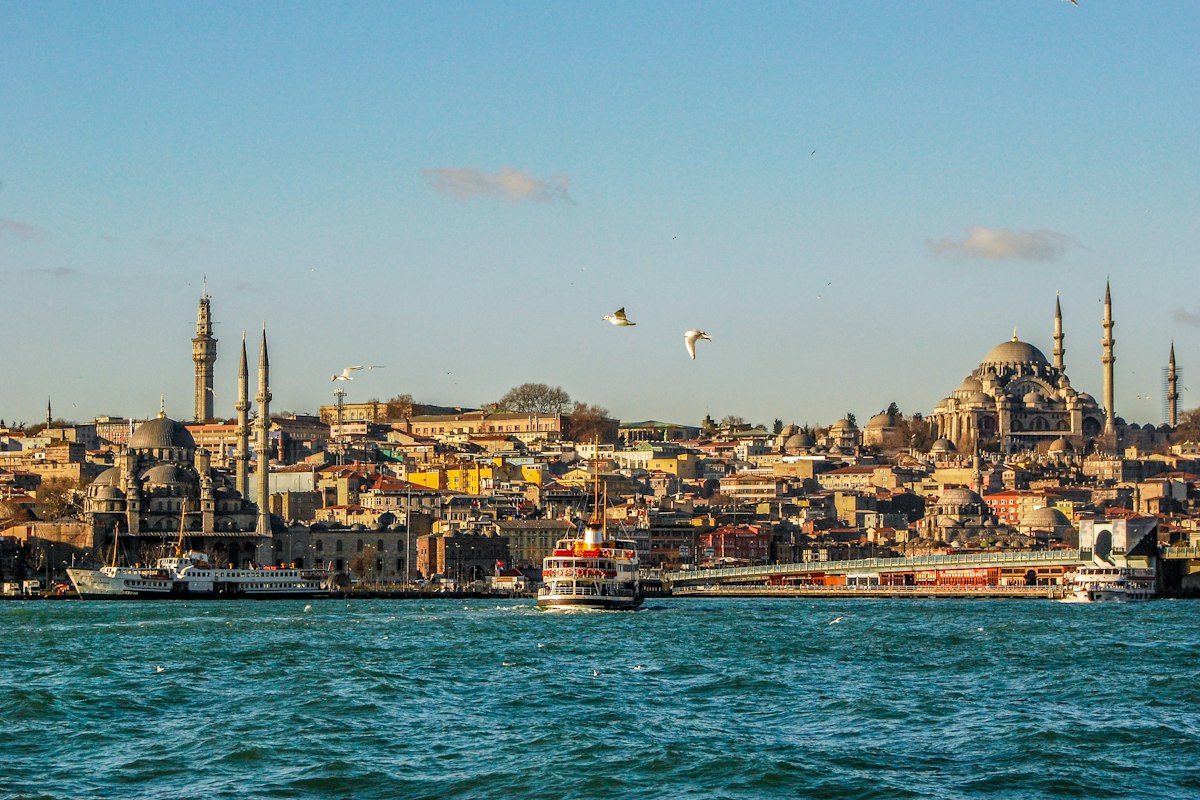
To have a tummy tuck in Turkey safely, choose a qualified plastic surgeon and a licensed hospital, stay 7 to 10 days, and only fly home when your surgeon confirms you are fit to travel.
How long do you stay in Turkey after a tummy tuck?
Medconsulto usually plans 7 to 10 days in Istanbul: a day for the consultation and tests, 1 to 2 nights in hospital, then several days in a hotel until your drains are out and your wound has been checked. Plan to walk regularly, drink plenty of water and wear compression stockings on the flight home.
How to check your surgeon and hospital
- Ask for the full name of the operating surgeon and confirm that they are a specialist in plastic, reconstructive and aesthetic surgery.
- Check that the hospital is licensed by the Turkish Ministry of Health. You can look up approved facilities on HealthTürkiye.
- Make sure you meet the surgeon before the day of surgery, not only a coordinator.
- Get the price, what it includes and the aftercare plan in writing.
Why choose Medconsulto for a tummy tuck in Turkey?
Medconsulto helps you check that a tummy tuck is right for you before you travel, and plans the surgery, hospital stay and aftercare with a qualified medical team.
- An honest assessment: if liposuction alone or a mini tummy tuck would suit you better, we tell you before you spend anything.
- Qualified surgeons who specialise in plastic and aesthetic surgery.
- Licensed hospitals approved by the Turkish Ministry of Health.
- A clear, itemised price that shows whether muscle repair, hospital nights, hotel and transfers are included.
- Support from arrival to follow-up, including an interpreter and contact after you go home.
Get your free tummy tuck consultation
Tummy tuck in Turkey: frequently asked questions
How much does a tummy tuck cost in Turkey?
A tummy tuck in Turkey typically costs $2,500 to $8,000: about $2,500 to $3,500 for a mini tummy tuck, $4,000 to $7,000 for a full tummy tuck and $5,000 to $8,000 for an extended or 360 tummy tuck. The price depends on the surgeon, the hospital and what the package includes.
Is it safe to get a tummy tuck in Turkey?
A tummy tuck in Turkey can be safe when it is done by a qualified plastic surgeon in a hospital licensed by the Turkish Ministry of Health, and when you stay long enough for check-ups before flying. Like any major surgery, it carries risks such as seroma, infection, wound-healing problems and blood clots.
Why is a tummy tuck cheaper in Turkey?
A tummy tuck is cheaper in Turkey mainly because of lower staff, hospital and living costs, and because many packages bundle the surgeon, anaesthesia, hospital stay and transfers into one price. A lower price does not have to mean lower quality, but you should still check the surgeon’s qualifications and what the quote includes.
How long do you stay in Turkey after a tummy tuck?
Most people stay 7 to 10 days in Turkey after a tummy tuck. This usually covers 1 to 2 nights in hospital and several days in a hotel until drains are removed and the surgeon confirms you are fit to fly.
Which country is best for tummy tuck?
The best country for a tummy tuck is the one where you can reach a qualified plastic surgeon, a licensed hospital and reliable aftercare. Turkey is a popular choice because prices are lower than in the US and UK and Istanbul has many specialist plastic surgeons, but the surgeon and hospital matter more than the country.
What is the cheapest country to get a tummy tuck?
Prices are lower in several medical tourism countries, and Turkey is among the most popular for a tummy tuck, at about $2,500 to $8,000 depending on the type. The cheapest quote is not always the best value: check what it includes, who operates and how complications would be handled.
How painful is a tummy tuck on a scale of 1 to 10?
Pain varies from person to person, but most people describe the first few days after a tummy tuck as the most uncomfortable, with tightness and soreness that is worst when getting up or coughing. Prescribed painkillers control it, and it eases steadily over the first one to two weeks. Muscle repair usually makes recovery more painful than a mini tummy tuck.
What disqualifies you from a tummy tuck?
You may not be suitable for a tummy tuck if you are still losing weight, plan more pregnancies, smoke and cannot stop, or have health problems that affect circulation or healing, such as poorly controlled diabetes or heart disease. A high BMI also raises the risk of complications, and the surgeon may ask you to lose weight first.
What happens 10 years after a tummy tuck?
Ten years after a tummy tuck, most people keep a flatter abdomen because the removed skin and fat do not come back. Ageing, weight gain or pregnancy can loosen the skin again, and the scar is usually pale and flat by then.
What is the best age for a tummy tuck?
There is no single best age for a tummy tuck. The best time is when you are a healthy adult at a stable weight and have finished having children, which for many people is between their 30s and 50s. Older adults can also have a tummy tuck if they are healthy enough for surgery.
What is the best type of tummy tuck?
The best type of tummy tuck depends on your body. A mini tummy tuck suits a small pouch of skin below the belly button, a full tummy tuck suits loose skin above and below the belly button with separated muscles, and an extended or 360 tummy tuck suits loose skin on the sides or back after major weight loss.
How long is recovery from a tummy tuck?
Most people need at least one week off work after a tummy tuck, avoid heavy lifting and strenuous exercise for 4 to 6 weeks, and see their final result after about 3 months. The scar continues to fade for up to a year.
What is the difference between a mini and a full tummy tuck?
A mini tummy tuck treats a small pouch of loose skin below the belly button through a shorter incision, usually without moving the belly button. A full tummy tuck uses a hip-to-hip incision, removes loose skin above and below the belly button, repositions the belly button and usually repairs separated muscles.
Does a tummy tuck remove stretch marks?
A tummy tuck removes the stretch marks on the skin that is cut away, which is usually the skin below the belly button. Stretch marks on the remaining skin stay, although they may look slightly flatter.
Can you have a tummy tuck and liposuction together?
Yes. Liposuction of the flanks, waist or back is often combined with a tummy tuck to improve the shape of the waist. Combining procedures makes the operation longer and the price higher, and your surgeon decides whether it is safe for you.
Can you get pregnant after a tummy tuck?
Yes, a tummy tuck does not affect fertility, but a later pregnancy can stretch the skin and muscles again and undo part of the result. This is why surgeons usually advise waiting until you have finished having children.
Is a tummy tuck permanent?
The removed skin and fat do not come back, so a tummy tuck gives a long-lasting result. Weight gain, pregnancy and ageing can still change the shape of the abdomen over time.
Will I have a scar after a tummy tuck?
Yes. A full tummy tuck leaves a low scar across the abdomen, usually from hip to hip, and a small scar around the belly button. It is placed so that underwear or a swimsuit can hide it, and it fades over 12 months or more.
What is the most common complication after a tummy tuck?
Seroma, a collection of fluid under the skin, is the most common local complication after a tummy tuck. A 2021 meta-analysis found it in about 10.9 percent of patients, and it is usually treated by draining the fluid with a needle.
Does insurance cover a tummy tuck?
Insurance usually does not cover a cosmetic tummy tuck. It may cover part of the cost of a panniculectomy, the removal of a hanging apron of skin, when it causes medical problems such as rashes or infections.
Ready for a flatter, firmer stomach?
Send us photos of your abdomen and a short note about your health. Medconsulto will tell you which tummy tuck suits you, give you an itemised price and organise your trip to Istanbul.
Request a free consultation