Types of Liposuction: Techniques, Costs and Which Is Best for You
The main types of liposuction are traditional (suction-assisted), tumescent, super-wet, ultrasound-assisted (including VASER), laser-assisted (Smart Lipo), power-assisted and water-assisted liposuction. They all remove fat through a thin tube called a cannula; the difference is how the fat is loosened first: with fluid, ultrasound, laser heat, vibration or a water jet. Tumescent liposuction is the most widely used. In Turkey, tumescent liposuction typically starts at about $1,800 to $2,200, and VASER or laser techniques usually cost 20 to 30% more.
Liposuction is one of the most popular body contouring surgeries for women and men who have stubborn fat that does not respond to diet and exercise. But “liposuction” is not one single procedure. Surgeons choose between several techniques depending on the area, the amount of fat, your skin quality and your goals. This guide explains the different kinds of liposuction and the main lipo techniques, how each one works, who it suits, how recovery compares, and what each type of lipo costs in Turkey.
What are the different types of liposuction?
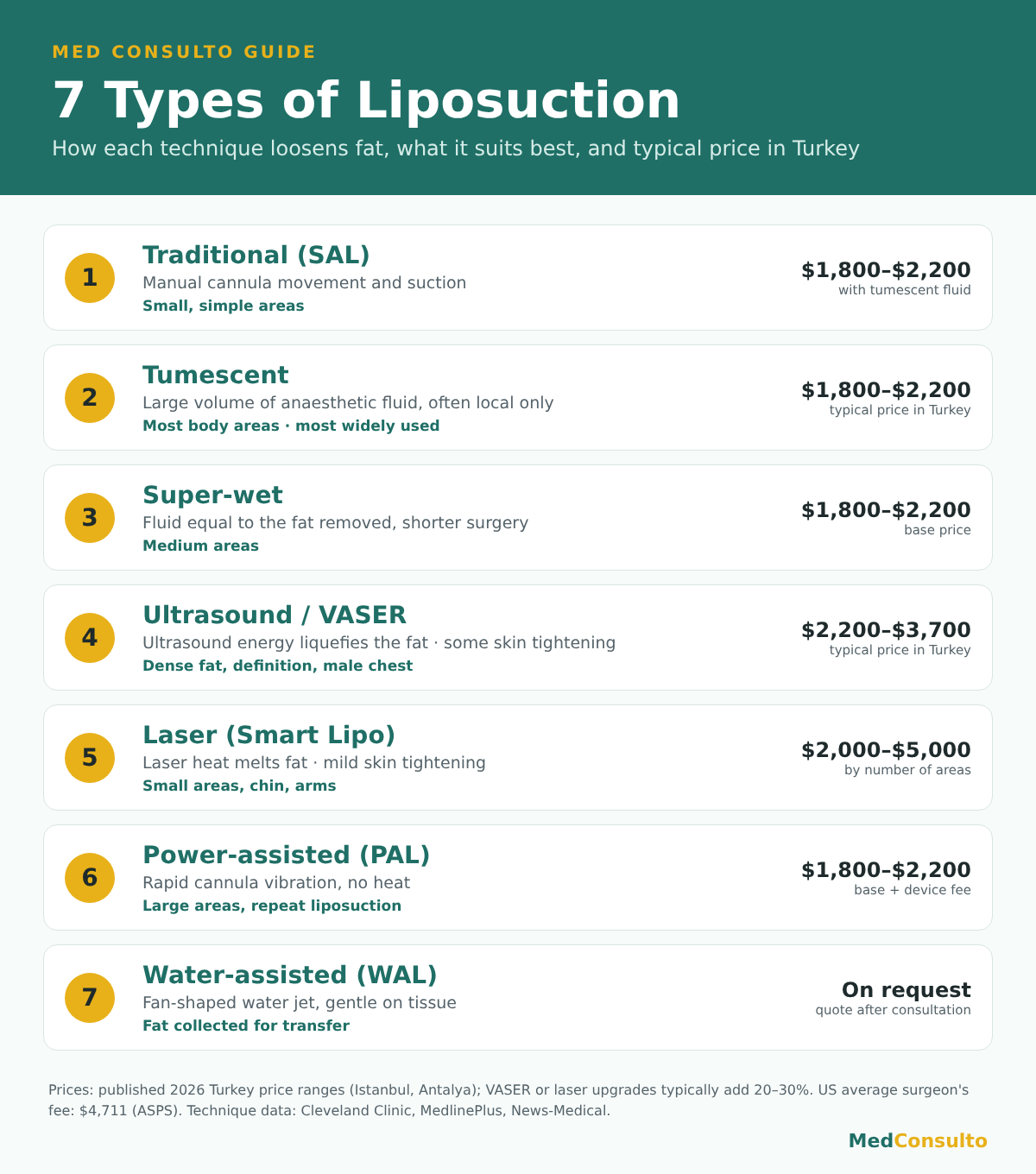
The different types of liposuction techniques are grouped by the way the fat is loosened before it is suctioned out. The seven main techniques are:
- Traditional liposuction (suction-assisted, SAL): the surgeon breaks up fat by moving the cannula back and forth and removes it with suction.
- Tumescent liposuction: a large volume of fluid with local anaesthetic and epinephrine is injected first, to numb the area and reduce bleeding.
- Super-wet liposuction: similar to tumescent, but uses less fluid, about the same volume as the fat removed.
- Ultrasound-assisted liposuction (UAL and VASER): ultrasound energy liquefies fat before it is removed.
- Laser-assisted liposuction (LAL or Smart Lipo): laser energy melts fat and heats the tissue under the skin.
- Power-assisted liposuction (PAL): a cannula that vibrates rapidly breaks up fat with less effort.
- Water-assisted liposuction (WAL): a fan-shaped water jet loosens fat cells from the surrounding tissue.
Newer energy-based methods, such as radiofrequency-assisted liposuction, also exist. Non-surgical fat reduction treatments, such as fat freezing, are sometimes called “non-invasive liposuction” (and listed as types of non invasive liposuction), but they are not liposuction because no fat is suctioned out.
How many types of liposuction are there?
There are seven main types of liposuction in common use, although medical references list up to a dozen variations. A review on News-Medical describes techniques including dry, wet, tumescent, super-wet, ultrasound-assisted, VASER, power-assisted, water-assisted, twin-cannula, laser-assisted and radiofrequency-assisted liposuction. In practice, many surgeons combine two methods, for example tumescent fluid with VASER or power-assisted suction, in the same operation.
Types of liposuction compared: lipo types side by side
The best way to compare the types of liposuction is by how the fat is loosened, how large an area each method suits, and whether it adds skin tightening.
| Type of liposuction | How fat is loosened | Usual anaesthesia | Best for | Skin tightening |
|---|---|---|---|---|
| Traditional (SAL) | Manual cannula movement and suction | Sedation or general | Small, simple areas | No |
| Tumescent | Large volume of anaesthetic fluid | Often local only | Most body areas, chin to ankles | No |
| Super-wet | Fluid equal to the fat removed | IV sedation or general | Medium areas, shorter surgery | No |
| Ultrasound-assisted / VASER | Ultrasound energy | Local, sedation or general | Dense or fibrous fat, back, male chest, definition | Some |
| Laser-assisted (Smart Lipo) | Laser heat | Often local or sedation | Small areas, chin and neck, arms | Yes, mild |
| Power-assisted (PAL) | Rapid cannula vibration | Local, sedation or general | Larger areas and repeat liposuction | No |
| Water-assisted (WAL) | Fan-shaped water jet | Often local | Gentle treatment, fat collected for transfer | No |
Sources: Cleveland Clinic, MedlinePlus and News-Medical (see the source list at the end of this article). Your surgeon chooses the anaesthesia based on the number of areas and your health.
1. Traditional liposuction: the original type of lipo (suction-assisted)
Traditional liposuction, also called suction-assisted liposuction (SAL), is the original technique: the surgeon moves a hollow cannula back and forth to break up fat and removes it with a vacuum.
It is sometimes called the “dry technique” because, in its original form, no fluid was injected first. Today traditional liposuction is almost always combined with tumescent or super-wet fluid, which reduces bleeding. It remains the reference against which all other techniques are measured. A 2018 review of 25 comparative studies in Annals of Plastic Surgery found that, apart from a few specific uses, the newer devices showed “equivocal results among the described techniques with no clear benefit to set one apart from the other” (Collins and Moyer).
- Good for: small and medium areas where no extra skin tightening is needed
- Less suited to: dense, fibrous fat, such as the back or the male chest
2. Tumescent liposuction: the most common type of liposuction
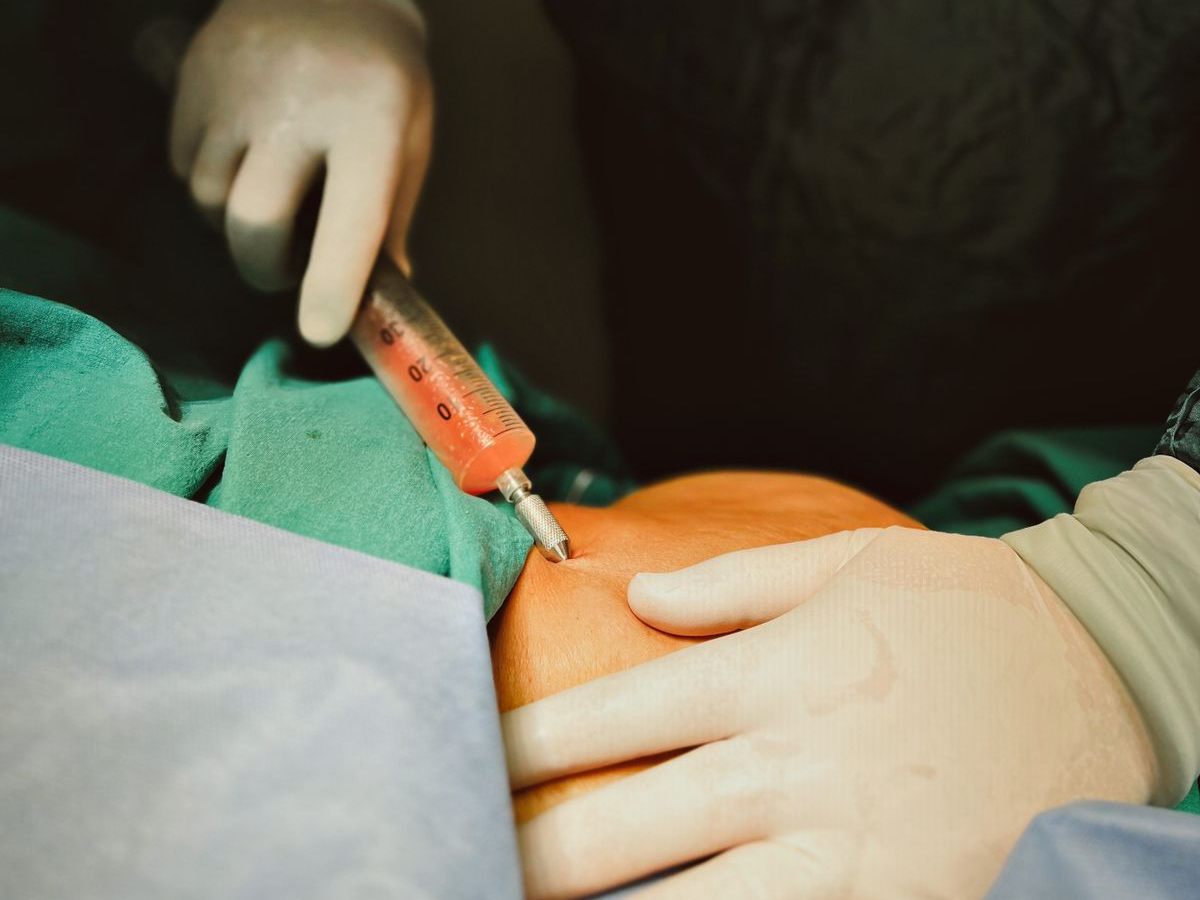
Tumescent liposuction is a type of liposuction in which a large amount of diluted local anaesthetic (lidocaine) and epinephrine is injected into the fat before it is removed. The fluid makes the area swollen and firm (“tumescent”), numbs it, and shrinks the blood vessels so there is less bleeding and bruising.
Tumescent liposuction is the most popular type of liposuction. MedlinePlus notes that the injected solution “may be the only anesthesia needed for the procedure”, which is why tumescent lipo is often done as an outpatient procedure without general anaesthesia. UCSF Health describes the same approach: the solution of local anaesthetic and epinephrine also reduces blood loss, and the anaesthetic effect lasts about 24 hours after surgery.
Liposuction tumescent solution: what is in it?
The tumescent solution is a mixture of salt water (saline), a local anaesthetic called lidocaine and epinephrine, which narrows the blood vessels. In tumescent liposuction, the volume of fluid is two to three times the volume of fat removed, according to Cleveland Clinic.
Benefits of tumescent liposuction vs other types
Pros
- Often possible under local anaesthesia, without general anaesthesia
- Less blood loss and bruising
- Less pain right after surgery
- Works on most areas, from the chin and neck to the abdomen, hips, thighs, knees and ankles
- Usually a lower-cost option
Cons
- Surgery takes longer because the fluid has to be injected first
- Fluid drains from the incisions for a day or two
- No added skin tightening
- Lidocaine and fluid must be dosed carefully by the surgical team
Ideal patients for tumescent liposuction are people who want to avoid general anaesthesia, those treating one or several standard areas, and patients looking for a proven technique at a lower cost.
Tumescent liposuction recovery
According to UCSF Health, walking is encouraged straight after tumescent liposuction, exercise can usually resume three to seven days after the procedure, and improvement appears within one to two weeks, while the full result takes “at least three to four months”.
Tumescent liposuction cost
Tumescent liposuction in Turkey typically costs from about $1,800 to $2,200 for a standard treatment, depending on the areas treated, the hospital and the city. The full cost comparison for each type of lipo is in the cost section below.

3. Super-wet liposuction technique
Super-wet liposuction is similar to tumescent liposuction but uses less fluid: about one millilitre of solution for each millilitre of fat removed. Cleveland Clinic describes it this way: “The wetting solution is equal to the volume of fat removed.”
Because less fluid is injected, the surgery is shorter. MedlinePlus notes that super-wet liposuction “often requires sedation (medicine that makes you drowsy) or general anesthesia”. It is a common choice for medium-sized areas when the surgeon wants a shorter operating time.
4. Ultrasound-assisted liposuction (UAL) and VASER liposuction
Ultrasound assisted liposuction (UAL), also called ultrasonic liposuction or lipo ultrasound, uses sound-wave energy to liquefy fat cells before they are suctioned out. VASER is the best-known type of ultrasound-assisted liposuction.
The ultrasound energy is delivered through a thin probe under the skin. VASER uses pulsed ultrasound through a grooved narrow probe, which is designed to loosen fat while sparing nearby blood vessels, nerves and connective tissue. This makes ultrasound liposuction useful for dense or fibrous fat, such as the back, flanks and male chest, and for detailed body sculpting, often called high-definition liposuction. It is sometimes referred to as “Lipo Selection”.
The 2018 Annals of Plastic Surgery review found that ultrasound-assisted liposuction had an advantage over traditional liposuction in the treatment of gynecomastia (enlarged male breast tissue), and that both UAL and laser lipo were linked to less blood loss in high-volume liposuction.
- Good for: athletic patients who want muscle definition, dense fat, several areas in one session, and mild skin laxity
- Specific risk: the heat can cause burns, so it needs a surgeon trained in the device
Read the full guide to VASER liposuction in Turkey for recovery and results.

Liposuction vs VASER liposuction: what is the difference?
The difference between lipo and VASER lipo is how the fat is loosened. In traditional liposuction, the surgeon breaks up the fat mechanically with the cannula. In VASER, ultrasound energy liquefies the fat first, so it can be removed with a smaller cannula and less force. VASER is usually chosen for definition and dense fat, while traditional or tumescent liposuction is often enough for standard areas.
| Traditional / tumescent liposuction | VASER liposuction | |
|---|---|---|
| How fat is loosened | Cannula movement, with tumescent fluid | Ultrasound energy, with tumescent fluid |
| Best for | Standard areas and larger volumes | Dense fat, definition, male chest |
| Skin tightening | No | Some |
| Price in Turkey | From about $1,800 to $2,200 | About $2,200 to $3,700 |
5. Laser-assisted liposuction (Smart Lipo)
Laser-assisted liposuction, also called laser assisted lipolysis or Smart Lipo, uses a thin laser fibre under the skin to melt fat before it is suctioned out. The laser heat also seals small blood vessels and stimulates collagen, which can tighten the skin slightly.
MedlinePlus describes laser-assisted liposuction as a technique that “uses laser energy to liquefy fat cells.” It works best on small to medium areas where the skin is thin, such as the chin and neck, arms, inner thighs and knees. The 2018 review found that laser lipo had an advantage over traditional liposuction for skin tightening in select areas, specifically under the chin.
- Good for: detailed contouring, small areas and patients with good skin elasticity
- Less suited to: removing large volumes of fat
For prices, recovery and devices, see our full guide to laser liposuction in Turkey.

Traditional liposuction vs laser lipo
Traditional liposuction can remove larger amounts of fat in one session, while laser lipo is better for small areas and adds mild skin tightening. Laser lipo is often done under local anaesthesia, and bruising tends to be lower because the heat seals small blood vessels. If you want to remove a lot of fat from the abdomen or thighs, tumescent, power-assisted or VASER liposuction is usually a better fit.
6. Power-assisted liposuction (PAL): power lipo
Power assisted liposuction (PAL), sometimes called power assisted lipo, uses a motorised cannula that vibrates rapidly to break up fat, so the surgeon can remove fat with less force.
Cleveland Clinic explains that power-assisted liposuction “uses a special device which uses tiny, rapid vibrations to break up fat cells” and that it “allows your surgeon to treat larger areas of your body more effectively.” Power liposuction uses the tumescent technique, and because it does not use heat, there is no risk of thermal burns. It is often chosen for large areas, fibrous fat and revision (repeat) liposuction.
7. Water-assisted liposuction (WAL): a gentle lipo technique
Water-assisted liposuction uses a thin, fan-shaped jet of fluid to loosen fat cells from the surrounding tissue while they are suctioned out at the same time.
It is considered a gentle technique because it causes less disruption to the tissue around the fat. The fat removed with water-assisted liposuction is often collected for fat transfer to the face, breasts or buttocks.
Other types of lipo and liposuction techniques
- Radiofrequency-assisted liposuction (RFAL): thermal energy from a high-frequency current dissolves fat and contracts the collagen in the skin.
- Twin-cannula liposuction: a tube within a tube, where one part disrupts the fat and the other removes it.
- Lipo 360: not a separate technique, but a treatment plan that covers the whole midsection, front, sides and back, in one session, usually with tumescent, VASER or power-assisted liposuction.
- High-definition liposuction: an advanced sculpting approach, usually with VASER, that highlights the muscles underneath.
Which type of liposuction is best?
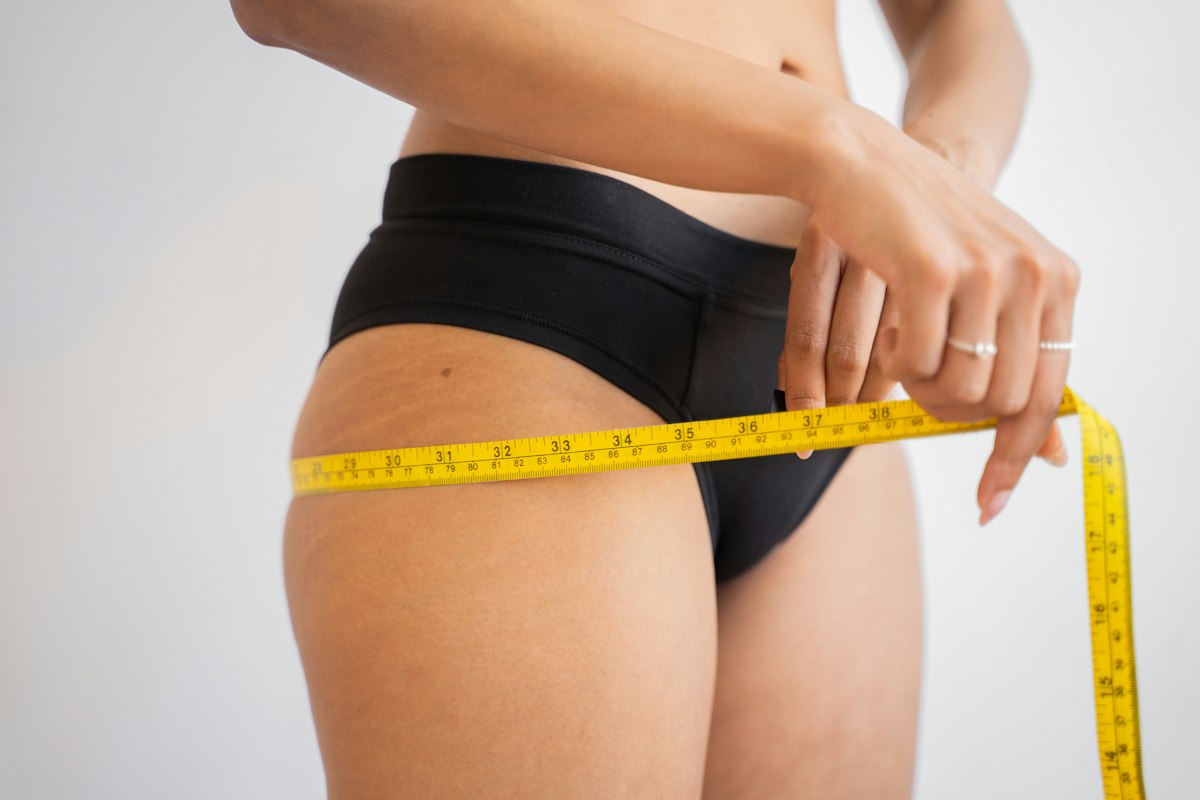
There is no single best type of liposuction for everyone. The most effective type depends on the area, the amount of fat, your skin quality and, above all, your surgeon’s experience with the technique.
Comparative research supports this: the Annals of Plastic Surgery review found “no demonstrable added benefit” from ultrasound or laser devices that would justify changing practice, except in the specific cases listed above. Use the guide below as a starting point for your consultation:
| Your goal or area | Types of liposuction often used |
|---|---|
| Stomach and waist | Tumescent, VASER or power-assisted; VASER for definition |
| Thighs and knees (best type of liposuction for thighs) | Tumescent or VASER; laser for the inner thigh and knees |
| Chin and neck | Laser-assisted or tumescent |
| Arms | Laser-assisted or VASER |
| Back, flanks and male chest | VASER or power-assisted |
| Fat to be transferred to another area | Water-assisted or tumescent |
| Repeat (revision) liposuction | Power-assisted or VASER |
For area-by-area details, see our guides to stomach liposuction, thigh liposuction, chin and neck liposuction, arm liposuction, love handle and hip liposuction and calf liposuction.
Which type of lipo removes the most fat?
Tumescent liposuction, often combined with power-assisted or VASER technology, is the type most often used to remove larger volumes of fat. Laser lipo is better for small, precise areas. Liposuction is a body contouring procedure, not a weight-loss treatment, and the safe amount removed in one session depends on your health and is set by your surgeon.
What is the safest type of liposuction?
The safest type of liposuction is the one performed by a qualified plastic surgeon in an accredited hospital, with the right technique for your body. Tumescent liposuction is often considered one of the safest: UCSF Health describes it as “more effective, safer and less painful than traditional liposuction”, because it can be done under local anaesthesia and reduces blood loss. Every type of liposuction still carries risks, which are explained below.
How is liposuction performed? Steps for every lipo technique
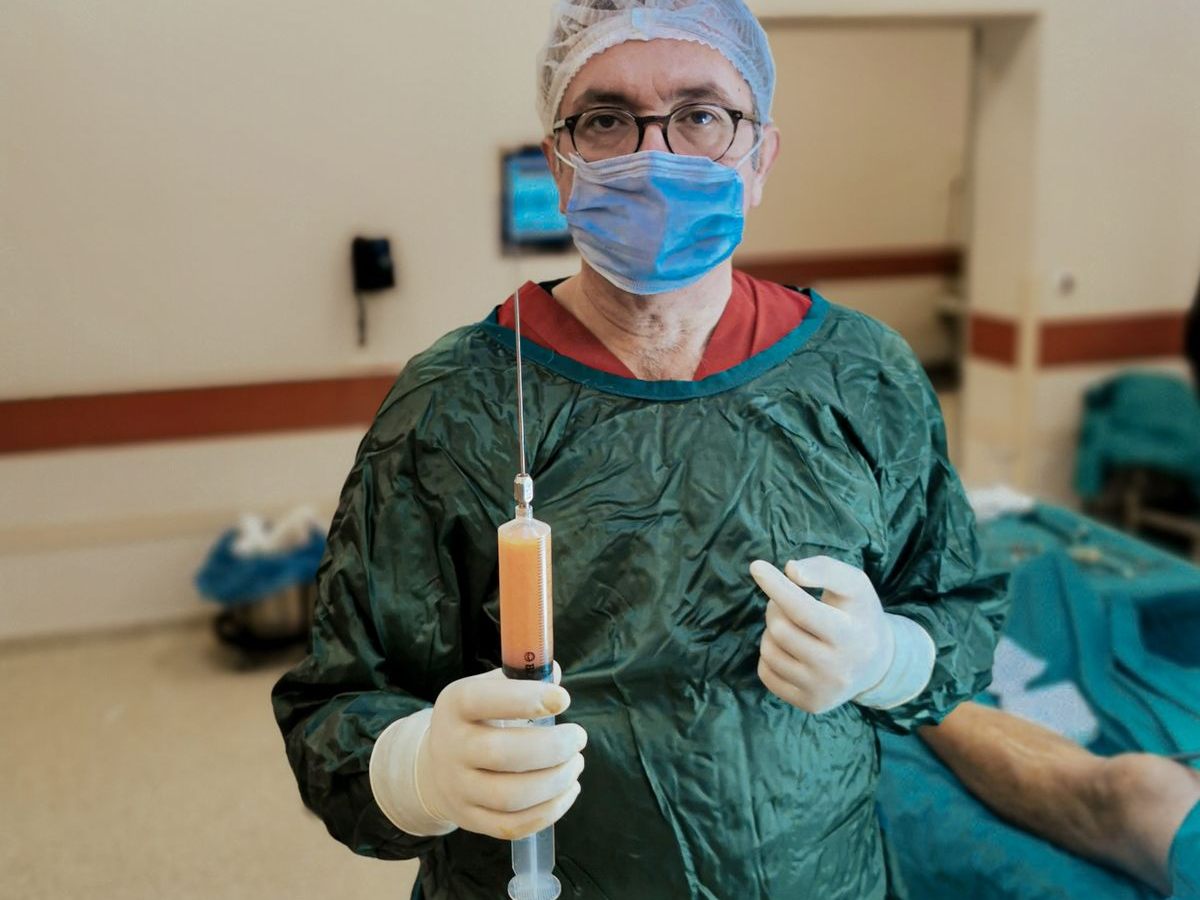
All types of liposuction follow the same basic steps; only the way the fat is loosened changes.
- Marking: the surgeon marks the areas while you stand.
- Anaesthesia: local anaesthesia, sedation or general anaesthesia is given.
- Fluid injection: tumescent or super-wet fluid is injected into the fat.
- Loosening the fat: with the cannula alone, or with ultrasound, laser, vibration or a water jet, depending on the type.
- Suction: the fat is removed through small incisions with a cannula.
- Finishing: the incisions are closed or left to drain, and a compression garment is put on.
Cleveland Clinic notes that liposuction is usually done as an outpatient procedure, so most people go home the same day.
What type of anaesthesia is used for liposuction?
Liposuction can be done under local anaesthesia, sedation or general anaesthesia. Tumescent liposuction of smaller areas can often be done under local anaesthesia alone, while super-wet liposuction and larger or multiple areas usually need IV sedation or general anaesthesia (MedlinePlus, Cleveland Clinic).
Types of liposuction and costs in Turkey
In Turkey, tumescent liposuction typically costs about $1,800 to $2,200, VASER liposuction about $2,200 to $3,700 and laser liposuction about $2,000 to $5,000. In the US, the average surgeon’s fee for liposuction is $4,711, before anaesthesia and operating room costs, according to the American Society of Plastic Surgeons.
| Type of liposuction | Typical price in Turkey |
|---|---|
| Traditional / tumescent liposuction | about $1,800 to $2,200 |
| Super-wet or power-assisted liposuction | about $1,800 to $2,200 base, plus a device fee in some hospitals |
| VASER (ultrasound-assisted) liposuction | about $2,200 to $3,700 |
| Laser liposuction (Smart Lipo) | about $2,000 to $5,000, depending on the number of areas |
Turkey price ranges are based on published 2026 prices from medical tourism providers in Istanbul and Antalya; VASER or laser upgrades typically add 20 to 30% to the base price. US figure: American Society of Plastic Surgeons, surgeon’s fee only. Your exact quote comes after the consultation.
The final cost depends on the number of areas, the technique, the type of anaesthesia and whether a hospital night is included. Men are increasingly choosing liposuction in Turkey too; see our main liposuction in Turkey page for what a package includes.
Non-surgical fat removal from the stomach vs types of liposuction
Liposuction removes fat cells through small incisions in one session, while non-surgical fat removal (such as fat freezing, laser or focused ultrasound) destroys a smaller amount of fat through the skin over several sessions.
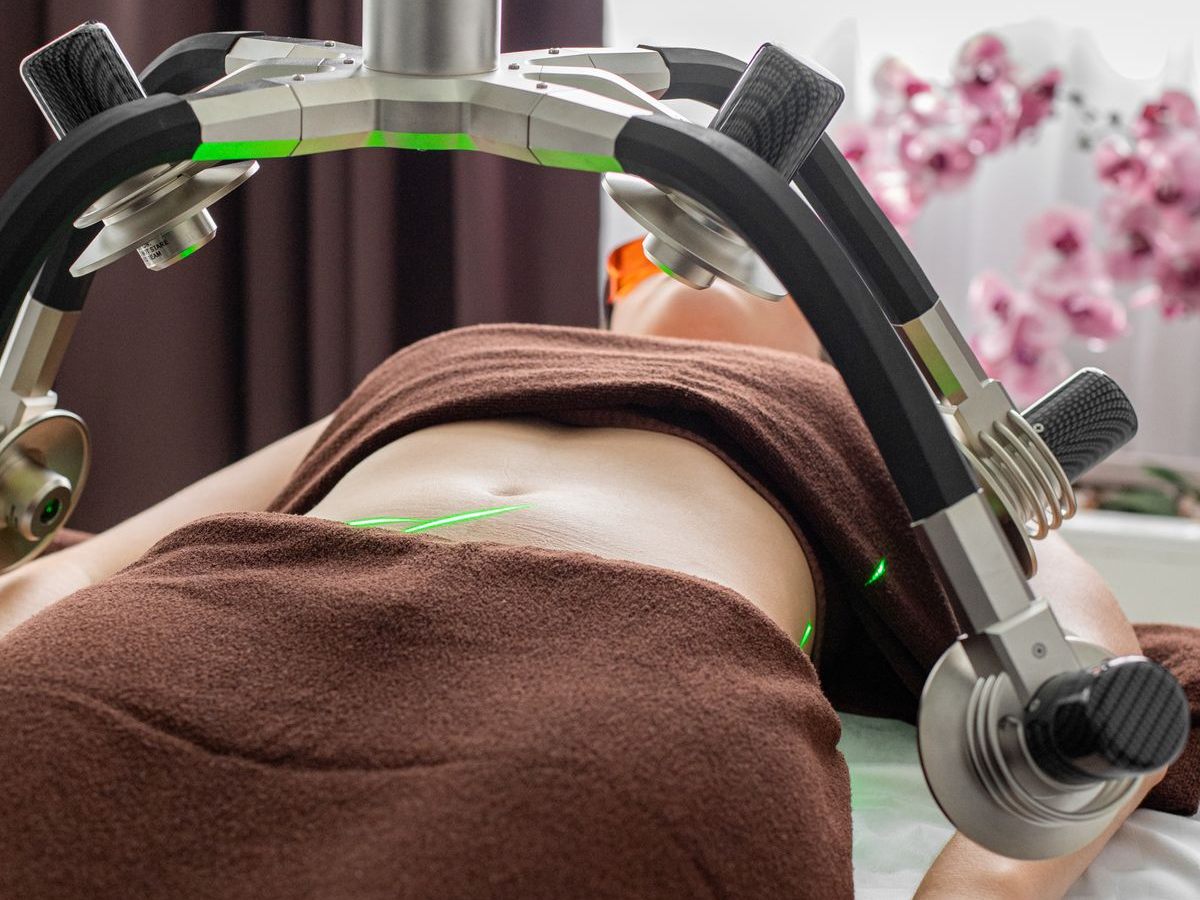
Non surgical fat removal from stomach, thighs and other areas suits people who want a modest change without surgery or downtime. Because no fat is suctioned out, these treatments are not types of liposuction. For the double chin, injections are another non-surgical option: read our guide to Kybella in Turkey.
Difference between liposuction and tummy tuck
Liposuction removes fat, while a tummy tuck (abdominoplasty) removes loose skin and tightens the abdominal muscles. If your main problem is loose skin or separated muscles after pregnancy or weight loss, liposuction alone will not fix it. Many patients combine the two. Compare the options in our guide to the types of tummy tucks.
Who is a good candidate for each type of liposuction?
According to Cleveland Clinic, the best candidate for liposuction is “a person of average or slightly above-average weight, in good health”, and it “isn’t recommended for people who are significantly overweight.”
- You have stubborn fat in specific areas that does not respond to diet and exercise
- Your weight has been stable for several months
- Your skin has good elasticity
- You do not smoke, or can stop for several weeks around surgery
- You want body shaping, not weight loss
You can check your BMI with our BMI calculator before your consultation.
Recovery and results after the different types of liposuction
Most people can return to work within a few days and to normal activities within about two weeks after liposuction, according to Cleveland Clinic. The final result usually appears after 3 to 6 months, once the swelling has settled.
Healthline notes that liposuction “is considered a permanent procedure”, because the fat cells removed do not come back, but “there’s always the possibility of gaining weight in the same area after the surgery.” Keeping a stable weight protects your result.
Risks and side effects of all types of liposuction
All types of liposuction are surgery and carry risks. Common side effects include swelling, bruising, soreness and temporary numbness.
“Liposuction can have serious or rare fatal complications.”MedlinePlus, U.S. National Library of Medicine
Possible complications listed by MedlinePlus include fluid overload, fat embolism (tiny globules of fat that block blood flow), damage to nerves, skin, tissue or organs, burns from the heat or instruments used, and reactions to the lidocaine used in the procedure. Other risks include infection, uneven contours and changes in skin colour. Heat-based types of liposuction (ultrasound and laser) carry a specific risk of burns. Choosing a certified plastic surgeon, an accredited hospital and an honest medical assessment is the most important way to lower these risks. Contact your medical team straight away if you have fever, increasing pain, spreading redness or shortness of breath.
Types of liposuction: frequently asked questions
What is the most effective type of liposuction?
The most effective type of liposuction depends on your area, the amount of fat and your skin. Tumescent liposuction is the most widely used and works on most areas, VASER suits dense fat and definition, and laser lipo suits small areas that need mild skin tightening. Research has not found one technique that is clearly better than the others overall, so the surgeon’s skill matters most.
How many types of liposuction are there?
There are seven main types of liposuction: traditional (suction-assisted), tumescent, super-wet, ultrasound-assisted (including VASER), laser-assisted, power-assisted and water-assisted liposuction. Medical references list further variations, such as radiofrequency-assisted and twin-cannula liposuction.
Which type of lipo removes the most fat?
Tumescent liposuction, often combined with power-assisted or VASER technology, is the type most often used to remove larger volumes of fat. Laser lipo is better suited to small areas. The safe amount in one session is set by your surgeon.
What is the difference between lipo and Vaser lipo?
In traditional liposuction, the fat is broken up mechanically with a cannula. In VASER lipo, ultrasound energy liquefies the fat first, so it can be removed with less force and some skin tightening. VASER is often chosen for dense fat and muscle definition.
What are the different types of liposuction?
The different types of liposuction are traditional, tumescent, super-wet, ultrasound-assisted (VASER), laser-assisted (Smart Lipo), power-assisted and water-assisted liposuction. They differ in how the fat is loosened before it is suctioned out.
What is the safest type of liposuction?
Tumescent liposuction is often considered one of the safest types because it can be done under local anaesthesia and reduces blood loss. Safety depends most on a qualified surgeon, an accredited hospital and a technique that suits your body. Every type of liposuction carries some risk.
What type of anesthesia is used for liposuction?
Liposuction can be done under local anaesthesia, sedation or general anaesthesia. Tumescent liposuction of smaller areas is often done under local anaesthesia alone, while larger or multiple areas usually need sedation or general anaesthesia.
How much does tumescent liposuction cost?
Tumescent liposuction in Turkey typically costs about $1,800 to $2,200. In the US, the average surgeon’s fee for liposuction is $4,711, before anaesthesia and facility costs, according to the American Society of Plastic Surgeons.
What is the best type of liposuction for stomach?
Tumescent, VASER and power-assisted liposuction are the types most often used for the stomach. VASER is often chosen when you want more definition, and a tummy tuck may be needed if you have loose skin.
Is liposuction permanent?
Yes. The fat cells removed during liposuction do not grow back. The remaining fat cells can still grow if you gain weight, so a stable weight protects the result.
What is the difference between liposuction and tummy tuck?
Liposuction removes fat through small incisions. A tummy tuck removes loose skin and tightens the abdominal muscles. Some patients need both.
How we ensure medical accuracy
This article was written by the Med Consulto editorial team and reviewed by our medical team, based on current medical guidelines and the sources listed below. It is for information only and does not replace a consultation with a qualified plastic surgeon.
Sources
- Cleveland Clinic. Liposuction.
- MedlinePlus, U.S. National Library of Medicine. Liposuction.
- UCSF Health. Tumescent Liposuction.
- Collins PS, Moyer KE. Evidence-Based Practice in Liposuction. Annals of Plastic Surgery, 2018;80(6S):S403–S405.
- American Society of Plastic Surgeons. How much does liposuction cost?
- News-Medical. Liposuction Types.
- Healthline. Liposuction.
Not sure which type of liposuction suits you?
Send us photos of the areas you want to treat. Our medical team will tell you which technique fits your body, how many areas you need, and the total cost of your trip to Turkey.
Book your free consultationMedically reviewed by the Med Consulto medical team. Last updated October 2026.